

In the late second century, a Christian writer called Tatian set out on an ambitious project: to splice all four gospels together into one super-gospel harmony.
Tatian’s amalgam was called the Diatessaron, because it was made ‘out of’ (dia) the ‘four’ (tessaron) gospels, and for centuries, it was used liturgically in some Syrian-speaking Churches. In the fourth century, Ephrem the Syrian wrote an extensive commentary on the work, and Theodoret of Cyrrhus later reported that he had found over two hundred copies of the text when he became Bishop of the region.
Tatian does not tell us why he wrote the Diatessaron, though one can see a clear incentive for producing a gospel harmony. While the gospels relay much of the same material, they do not always agree. This opened up Christianity to the accusation, levied by later critics such as Poryphry and Julian the Apostate, that the gospels were a hodgepodge of contradictions and that no single gospel was perfect. Tatian’s Diatessaron might have been an early attempt to dissolve this issue.
For many early Christians, however, the fact that there were four gospels – or one gospel told in four voices – was not a bug but a feature of the faith. Around the same time that Tatian was bringing the four gospels into one, the Church father Irenaeus was mounting a theological argument for the necessity of the fourfold gospel.
In Irenaeus’ view, there could be no fewer or greater than four gospels, because of the theological significance of the number four. There are four compass points of the earth, and four winds; there are also four faces to the cherubim – the creatures found in Ezekiel – and four covenants of God (through Adam, Noah, Moses and Christ).1
Such an argument for the necessity of four gospels may not sound convincing today. Yet the broader point that Irenaeus makes is compelling. For Irenaeus, each of the gospels is distinctive in the way that it presents Jesus. Thus, while the gospels are about the same person, to splice them together into a single narrative – like the Diatessaron – would be to lose the distinctive portrayal of Jesus of each gospel.
In modern scholarship, the distinctive portrayal of each gospel has been fleshed out by two methodologies. Redaction criticism studies the way that the gospel writers edited their sources, in keeping with their overall themes. Meanwhile, narrative criticism applies the insights of literary theory to the gospels, exploring the way that meaning is forged within the discrete narrative world that each gospel has constructed.
Irenaeus did not have these tools at his disposal. But he did recognise that each of the gospels had a peculiar essence. To capture this, Irenaeus associates each of them with a different animal, corresponding to four faces of the cherubim as they are ordered in the book of Ezekiel. In the original Western ordering of the gospels (Matthew, John, Luke, Mark), this meant Matthew was a human, John a lion, Luke an ox, and Mark an eagle. Or to take the Eastern/canonical order, which was standardised by Jerome in his Vulgate translation: Matthew = human, Mark = lion, Luke = ox, and John = eagle.
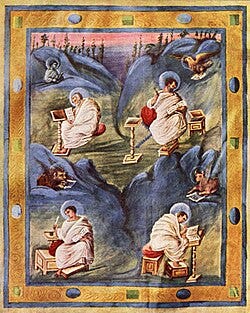
As these shifts in symbolism indicate, there is no mystical reason why each of the gospels corresponds to its particular creature. Still, I want to suggest that there is some value in this typology today. When we read the gospels or hear them read in Church, it can be easy to drift into Tatian’s way of thinking. We can think that each of the gospels are gospels, and so must be essentially conveying the same things.
But Irenaeus was right. The gospels are distinct, and seeing them as a menagerie of creatures can help us to avoid the temptation of collapsing their differences. Irenaeus’ typology can also serve as a useful aide-mémoire, with each animal being a peg on which can hang some of the gospel’s major themes. In what follows, I want to give a taster of some of the ways I think of the gospels as animals today.2
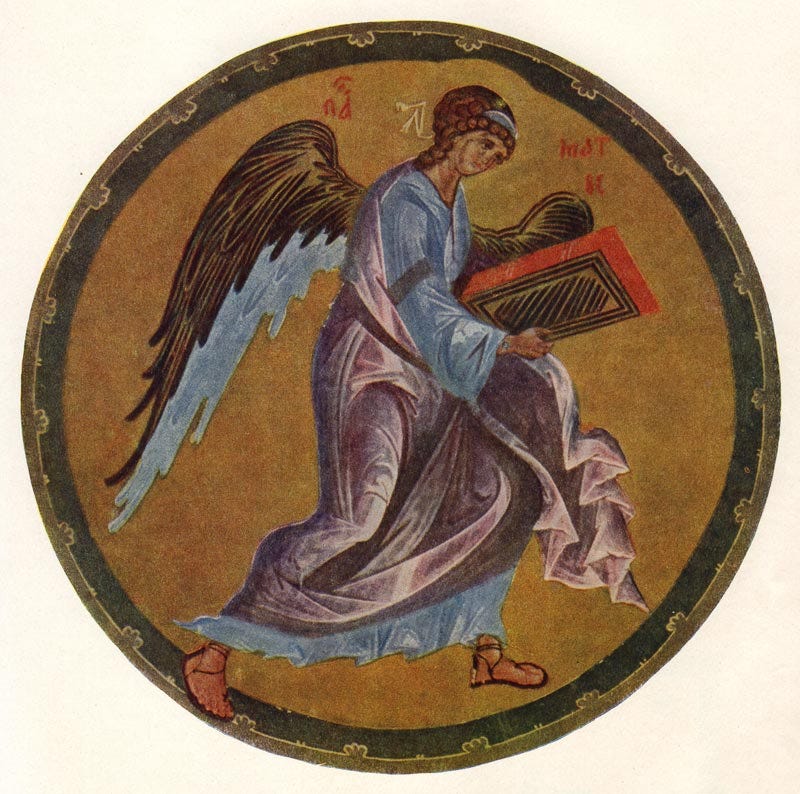
Matthew the Human: Matthew depicts Jesus as a true Israelite and a true human, who teaches others what it means to be human. This is seen not only in rooting Jesus’ humanity in the messiness of Israel’s story from his opening genealogy, but in the way that Matthew’s Jesus goes on to echo the figure of Moses. Like Moses, Jesus survives an infant massacre, passes through the waters (of baptism), spends time being tested in the desert, and delivers the law of God to the people. Yet where Moses and Israel faltered, Jesus completely aligns himself to God’s will, showing what it means to be fully human. His Sermon on the Mount, which echoes Moses’ instruction from Mount Sinai, can be seen as a treatise on authentic human life. Having shown his disciples what it means to be fully human, Matthew calls the twelve to take the same teaching to all of humanity.
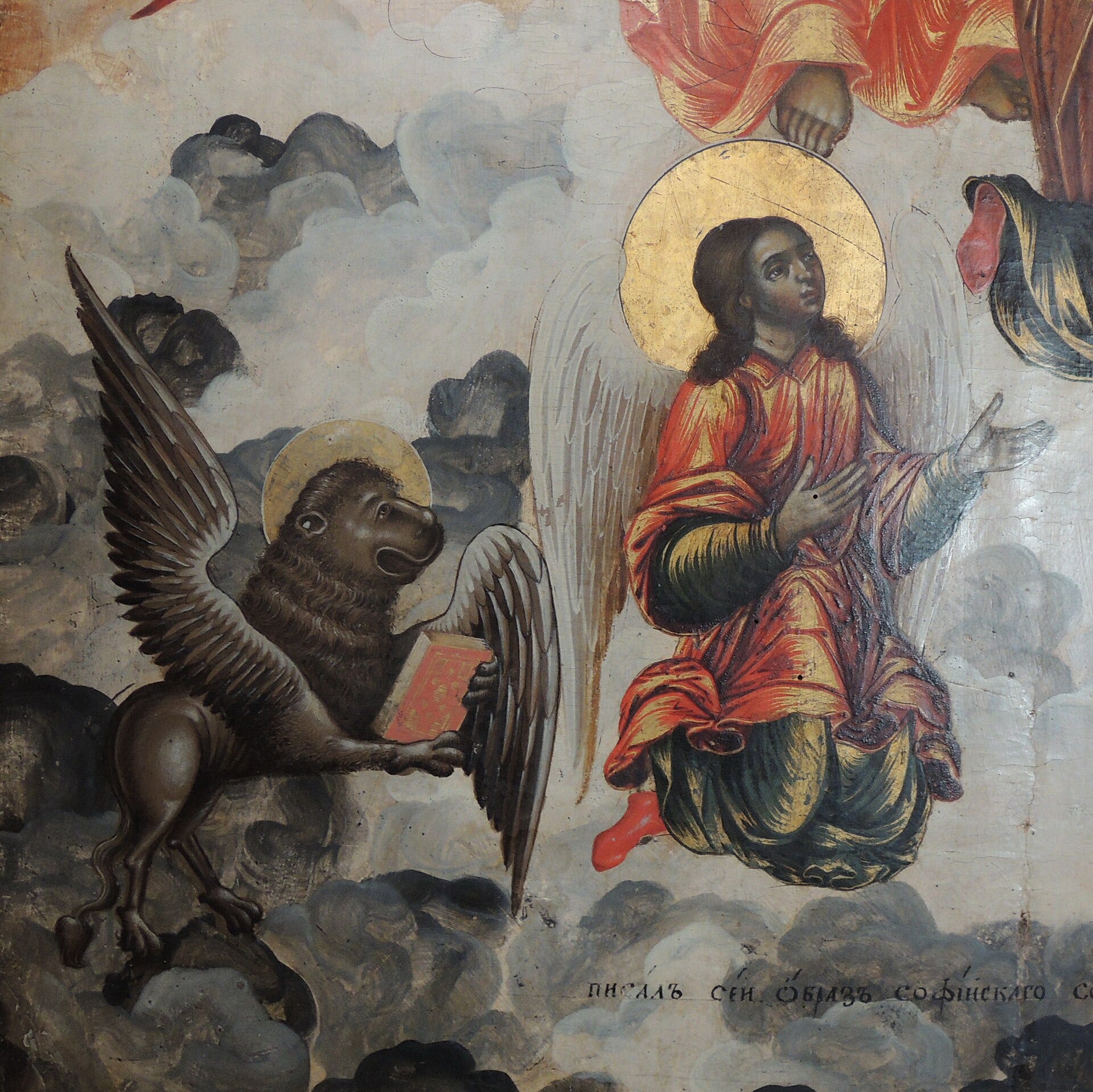
Mark the Lion: If Matthew presents Jesus as a human teacher, then Mark presents Jesus as a bounding lion, a man of action and a figure of triumph. One of Mark’s favourite words is eutheos – suddenly, immediately, forthwith! This creates a sense of pace as Mark’s Jesus moves through Galilee, vanquishing the forces of darkness, casting out demons and binding Satan. Yet as the lion moves towards Jerusalem, another side to his triumph is revealed. Whereas Matthew is devoted to teaching throughout the gospel, Mark has only one major teaching block (chs. 8-10), which is devoted to correcting a common mistake we might have about the ‘lion’ – that he won’t have to suffer and die. Laying down his life for his pride, Jesus shows that his ultimate triumph is not in conquest, but in death.
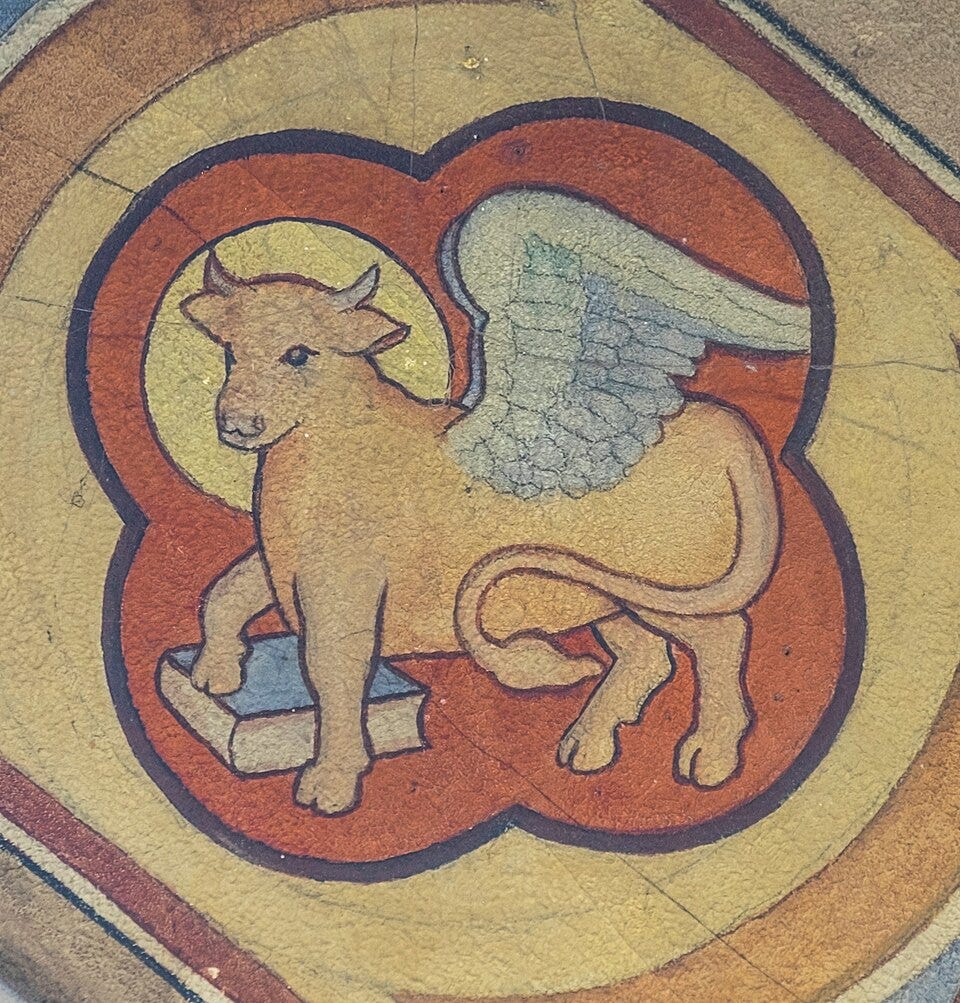
Luke the Ox: Luke’s gospel is traditionally associated with a calf or an ox, a creature who bears burdens. There could be no more fitting animal to describe Luke, which is focused more than any other gospel on Jesus’ mission to the poor. Unlike Matthew, where Jesus is visited by the magi, Luke has Jesus visited by humble shepherds. When the Ox comes to Nazareth, he announces that he has come to ‘bring good news to the poor’, and in his sermon on the plain, he proclaims, ‘blessed are the poor’ (contrast Matthew’s, ‘blessed are the poor in spirit’). The ox comes to those on the margins of faith and society – to Gentiles, tax collectors, women, sinners, non-able bodied persons – and brings them into his Kingdom. This is all part of Luke’s great reversal, foretold in Mary’s song, in which ‘the humble are exalted’ while the rich and powerful are sent empty away.
John the Eagle. The first three gospels are often referred to as Synoptic gospels, because they share a lot of the same material and can be ‘seen together’ (syn-opsis). But John gives us a very different angle on Jesus. It is entirely fitting that he should not be seen not as an earth-bound creature (a man, a lion, an ox) but as an eagle who soars over the ministry of Jesus and gives us a bird’s-eye view. Unlike the other gospels, which begin at Jesus’ birth or ministry, John takes us all the way back to the beginning of time. From his nest in heaven at the father’s side, the divine eagle swoops down to earth to accomplish the father’s will, before returning to his former glory he had with him. With perceptive eagle eyes, John glides over the whole of Jesus’ earthly life, revealing its true spiritual meaning. Jesus’ miracles are not simply demonstrations of power, but ‘signs’, which point to his identity. To help unpack the meaning of who Jesus is, John draws on a range of Jewish symbols, from the Temple and the Manna to the High Priest and Passover Lamb, all of which Jesus embodies in his sweeping descent.
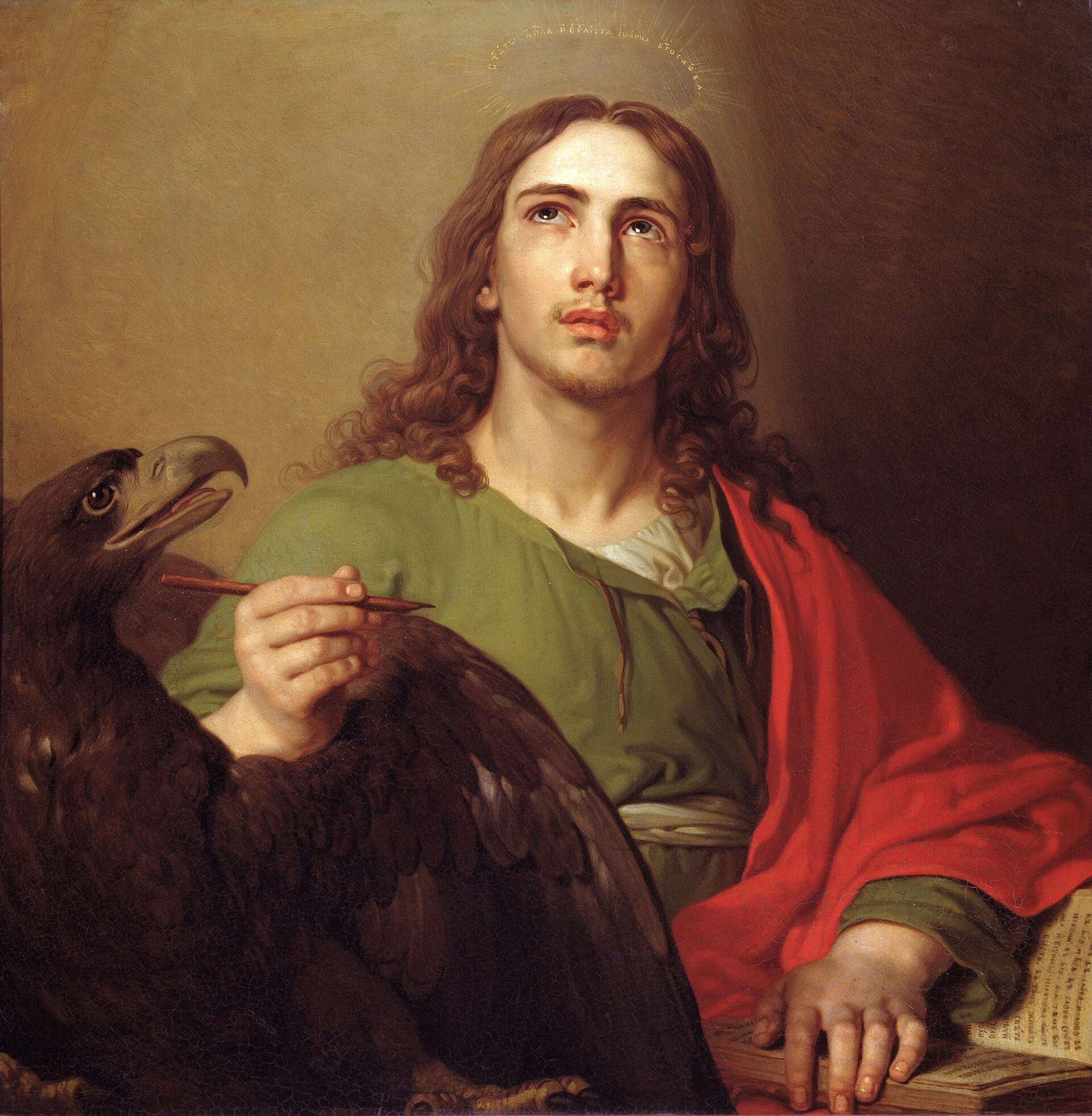
What are we to make of this typology? Of course, the gospel creatures do not exhaust what is distinctive about the gospels, and each symbol can be spun in a variety of ways. For example, the Church has often seen Luke’s ox in relation to sacrifice, which draws our mind to Jesus’ priestly relations in his infancy narrative and the ‘fattened calf’ slaughtered in his sublime parable of the prodigal son. Equally, one finds some of the most tender moments of Jesus’ humanity not in Matthew but in Luke and John.
Still, I have found the gospel symbols helpful for reminding me that the gospel is expressed in four distinctive ways. If anything, it also makes the task of visiting churches and museums more interesting! Statues and portraits of the evangelists often feature their corresponding creature; it can be fun to see if I can tell which is which. Perhaps next time you step into a church or museum, you might take up the task of animal spotting and remember the gospels’ distinctive portraits of Christ.
Thank you for reading Behind the Gospels! If you enjoyed this short piece, you might also enjoy these other pieces on the gospels:
Suggested Reading
Richard Burridge, Four Gospels, One Jesus. London: SPCK, 1994.
See Irenaeus, Against the Heresies, 3.2.8-9.
Here I largely follow the typology of Richard Burridge’s class Four Gospels, One Jesus? (London: SPCK, 1994).